
Madison Chock and Evan Bates stood still on the Olympic podium, silver medals resting against their chests. Just a few feet away, France’s Laurence Fournier Beaudry and Guillaume Cizeron leaned forward to receive the gold Chock and Bates had chased for more than a decade. The moment felt sharp and emotional. After 15 years as partners on and off the ice, their final Olympic chapter ended one place short of the top.
Yet the scene in Italy marked far more than a second-place finish. It represented the close of one of the most accomplished careers in modern ice dance.
A Career of Determination and Achievement
Chock and Bates arrived at their fourth Olympic Games together — and the fifth for Bates — with resumes few teams could match.
1. Three world championships
2. Seven U.S. national titles
3. Three of the last four Grand Prix Final victories
4. A second Olympic team gold medal secured days earlier
The only piece missing from their collection was Olympic gold in the individual category.
For four years, they led the discipline. Most competitors from the previous Olympic cycle stepped away, including Olympic champions Gabriella Papadakis and Cizeron, as well as American bronze medalists Madison Hubbell and Zachary Donohue. With the field shifting, Chock and Bates became the steady standard.
Still, Olympic ice can be unforgiving.
They finished just 1.43 points behind the leaders. One spot separated silver from gold.
Beijing’s Long Road to Gold
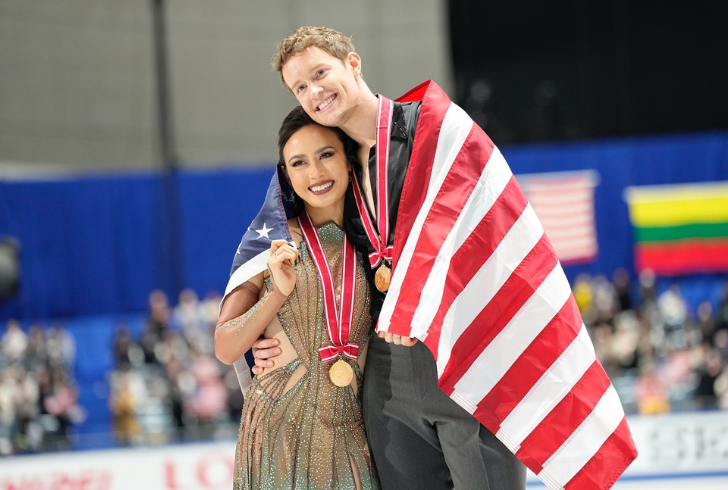
Instagram | isufigureskating | After three Olympics without a medal, Chock and Bates finally chased the podium in Beijing.
Four years earlier in Beijing, the pair sought their first Olympic medal after finishing no higher than ninth in previous Games. They had already earned two world championship medals and a third national title, yet Olympic hardware had remained out of reach.
In 2022, they delivered in the team event free dance. Their personal-best score lifted the United States to what was initially announced as silver. Then the competition shifted dramatically.
A failed drug test involving Kamila Valieva of the Russian Olympic Committee halted the medal ceremony. The investigation lasted nearly two years. Once Valieva’s scores were removed, the U.S. team rose from silver to gold. The American skaters finally received their Olympic gold medals at a ceremony in Paris in 2024 — two and a half years after the competition.
In the individual event in Beijing, Chock and Bates placed fourth. A rhythm dance that did not meet expectations cost them the podium.
“We are disappointed we didn't medal, but we are still proud of our career and what we have achieved,” Chock said at the time.
Leadership Beyond Scores
Ice dance rewards history, trust, and visible connection. Chock and Bates built all three over 15 seasons. Their chemistry — refined year after year — became part of their identity.
At these Games, they also served as emotional anchors for Team USA. They won both of their team segments, contributing 20 of the team’s 69 points. During the men’s free skate, Bates sat with his arm around Amber Glenn, ready to console her after a difficult skate.
Glenn described them as “Mr. and Mrs. America,” praising both their character and competitive example. She shared that they encouraged her to take everything in stride and appreciate even exhausting moments, knowing they would matter years later.
Younger teammates noticed their impact. Emilea Zingas, who finished fifth with Vadym Kolesnik in their Olympic debut, expressed admiration and called their performance “fabulous,” saying that if she could hand over her own gold, she would.
Canadian rivals Piper Gilles and Paul Poirier, two-time world silver medalists, credited the Americans for raising the competitive level. Gilles noted that friendly pressure pushes teams to skate at their best.
The Scoring Shock
Less than 24 hours after the team event concluded, the individual competition began. During the rhythm dance, judges scored Fournier Beaudry and Cizeron higher than Chock and Bates, despite the French team skating nearly two hours earlier in a different group.
“I didn't see that one coming,” said Scott Hamilton on NBC after the scores appeared.
Chock responded with visible determination. “The game is always on, and you should know us by now, we're not changing anything,” she said. “We've got this locked in, we know ourselves, we know our routine, and we've got this.”
The focus never wavered.
The Final Free Dance
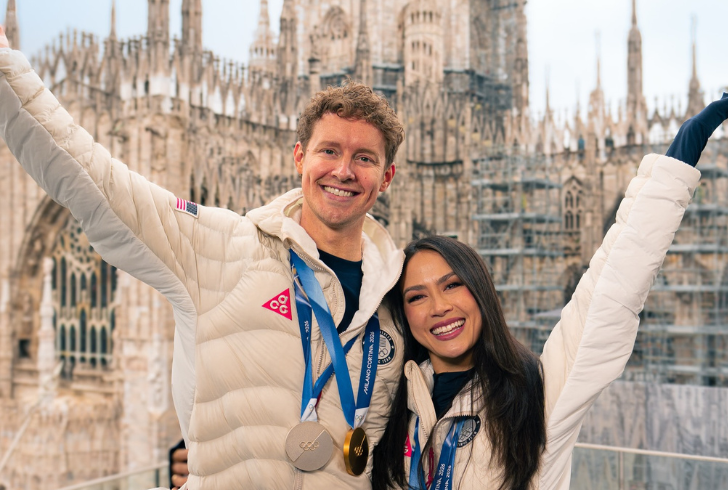
Instagram | chockbates | Chock and Bates secured Olympic silver, cementing a legacy of grace and excellence.
On Wednesday night, with both mothers filming from the front row, the duo delivered a matador-themed free dance set to a flamenco version of “Paint It Black.” Chock portrayed the matador; Bates skated as the bull. The program blended sharp footwork with theatrical control and earned a season-best 134.67.
They moved into first place temporarily and waited in reserved leader seats as Fournier Beaudry and Cizeron performed. The final scores triggered celebration from the French team. Chock and Bates held hands and smiled through visible emotion.
Bronze went to Gilles and Poirier.
Throughout the medal ceremony and mixed-zone interviews, both skaters maintained composure. Bates acknowledged that while disappointment felt fresh, pride would come with time. He also confirmed that their competitive future remained undecided.
Chock later described the result as “bittersweet” but emphasized gratitude.
“We really gave it our best,” she said. “And that's what we set out to do coming to these Games. So I think we've got a lot to be proud of and a lot to be grateful for because we've had an incredible career and we've been so well supported by our families and our coaches, by each other. And sometimes that's just how it shakes out.”
She added that all four Olympic performances at these Games felt flawless from their perspective.
“We couldn't have skated any better, and we're super proud of how we took the ice, how we handled ourselves every time, and the rest is out of our hands.”
A Legacy That Extends Beyond Medals
Chock and Bates did stand atop an Olympic podium in Italy alongside Glenn, Ilia Malinin, Alysa Liu, Ellie Kam, and Danny O'Shea as team gold medalists. Yet the individual silver carried a different weight.
What began fifteen years ago in shared training sessions and uncertain early seasons ended with confidence. Their last Olympic programs were composed and deliberate. Judges assigned the numbers, but the performance quality was evident to anyone watching.
Madison Chock and Evan Bates closed their Olympic run with silver and a sense of earned respect. Entering as favorites, they leave as seasoned competitors whose influence extends beyond medal counts.
World championships, years atop the national podium, team gold, and now individual Olympic silver define their record. The fairy-tale gold was just out of reach, yet their final skates carried clarity and resolve.
If this marks the end of their competitive story, it concludes with excellence, resilience, and a standard that shaped an era of American ice dance.